Home  /  Academics

CAPS, taught in three languages, with patience for the long haul.

Our learners follow the national CAPS curriculum from Grade R through Grade 6. The Language of Learning and Teaching (LOLT) is English from Grade 4 onward, with Setswana and IsiZulu as Home Languages and an additional language from Grade 1. Below: each learning area, how we teach it, and the projects we carry through the year.

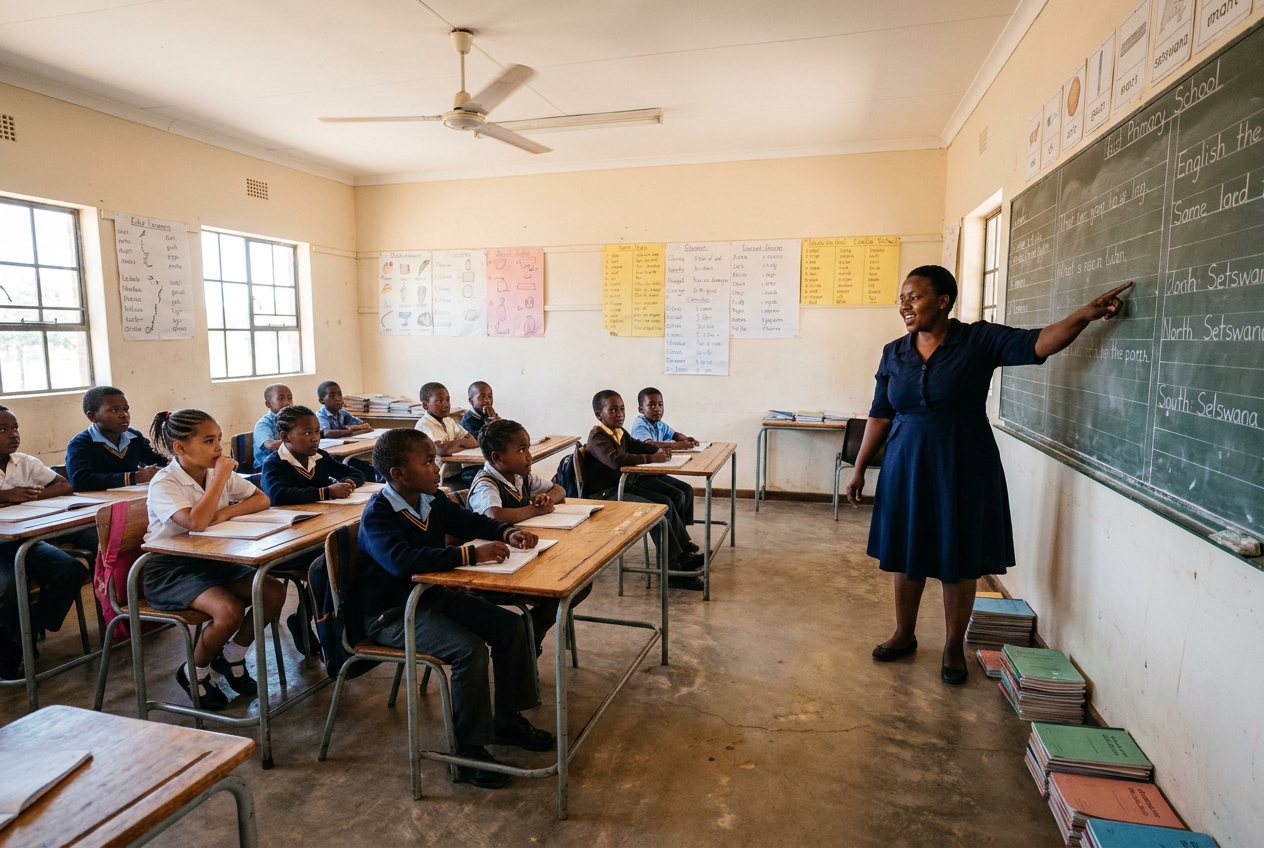
A wide view of a Magong Primary School classroom in mid-lesson with the teacher at the chalkboard

Learning Areas

Six subjects. One careful year of practice for each.

Every subject card lists what we hold the year accountable to: a goal, the way we teach it, the project we build around it, and how we know a child is growing.

01

Languages — English, Setswana, IsiZulu
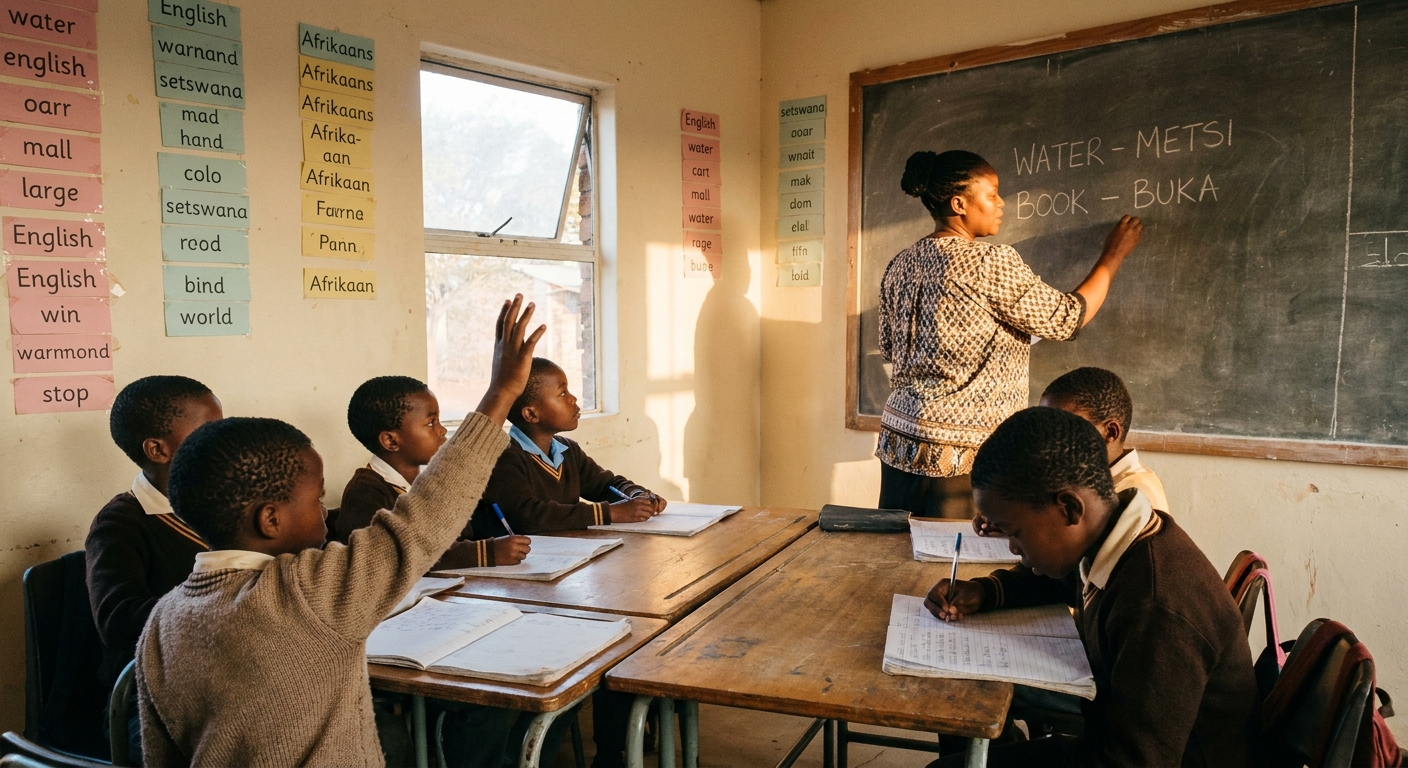
A teacher writing English and Setswana vocabulary side-by-side on a chalkboard
Goal
Confident reading, honest writing, and the courage to speak up in three languages by the end of Grade 6.
How we teach
Daily reading hour, paired aloud-reading, weekly journaling, story circles in Setswana on Friday afternoons.
Project
“My Village in Three Voices” — learners record a short oral history with a grandparent.
Assessment
Reading-aloud benchmarks, written portfolios, oral presentations — not just term tests.
02

Mathematics

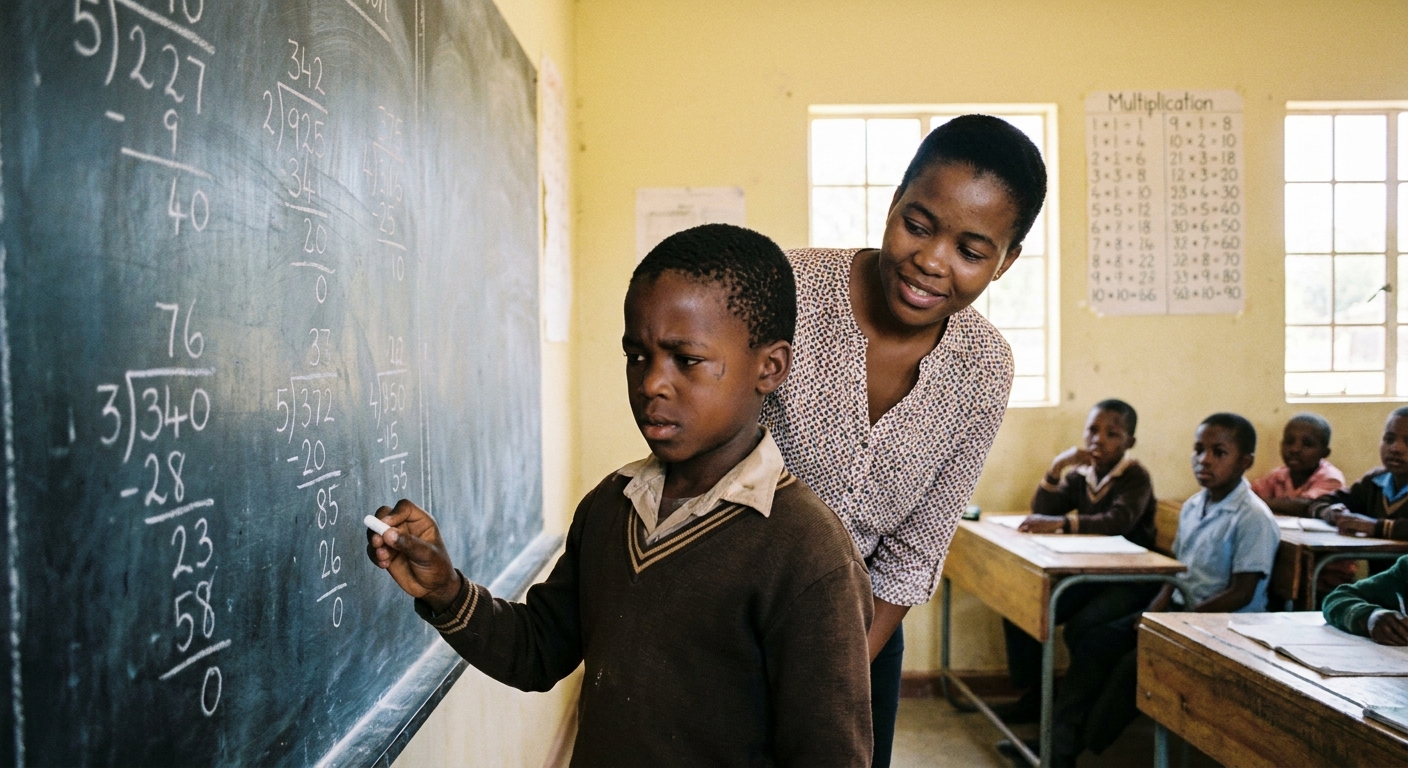
A boy solving long division at a chalkboard with the rest of the class watching
Goal
Number sense first, speed second. We want children who know why the sum works, not only how.
How we teach
Concrete-pictorial-abstract sequencing, daily mental maths warm-ups, real-world word problems from market stalls.
Project
Term 3 “Spaza Shop Maths” — running a one-day pop-up tuckshop with budget, change and stock-taking.
Assessment
Quarterly diagnostic, problem-solving observations, work samples in a yearly portfolio.
03

Natural Sciences & Technology

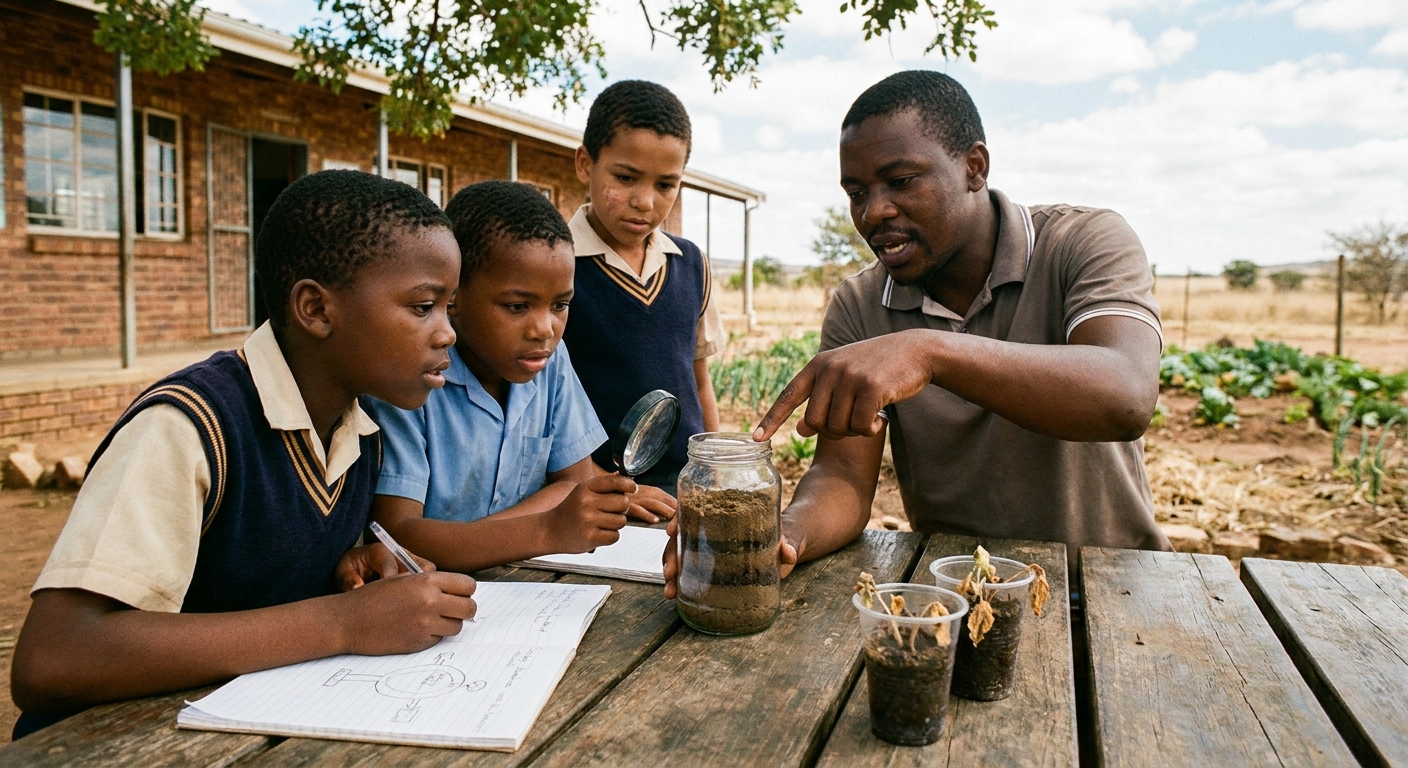
Children examining a glass jar of soil with a magnifying glass, the teacher pointing at the layers
Goal
To grow children who notice the world — and ask “why is the soil cracked over there but soft here?”
How we teach
Inquiry-led, outdoor when possible, with shared simple tools (beakers, seedlings, a single microscope) and weekly “wonder questions”.
Project
“Clean Water for My Village” — a Grade 6 group designs and tests a recycled-bottle filter.
Assessment
Investigation logs, hand-drawn diagrams, oral defense of findings.
04

Social Sciences — History & Geography

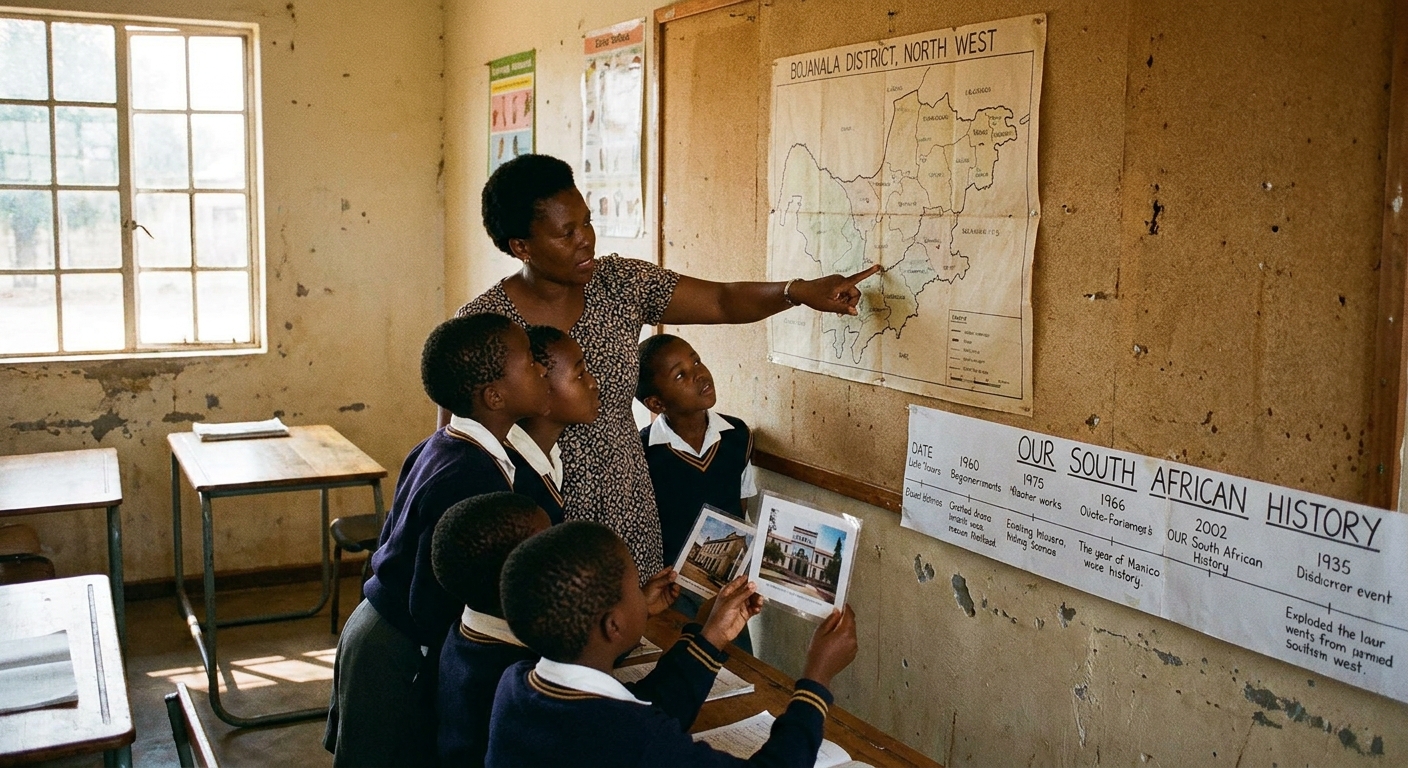
Children gathered around a hand-drawn map of the Bojanala District
Goal
To know where we are and where we’ve come from — before we look at the rest of the country.
How we teach
Local-first geography, oral-history projects, source work using donated print maps and hand-drawn timelines.
Project
“The People Of Magong” — a Grade 5 wall exhibit on the village’s 1970s school history.
Assessment
Source-based written tasks, exhibit presentations, group fieldwork notebooks.
05

Life Skills — Wellbeing, PE & Arts

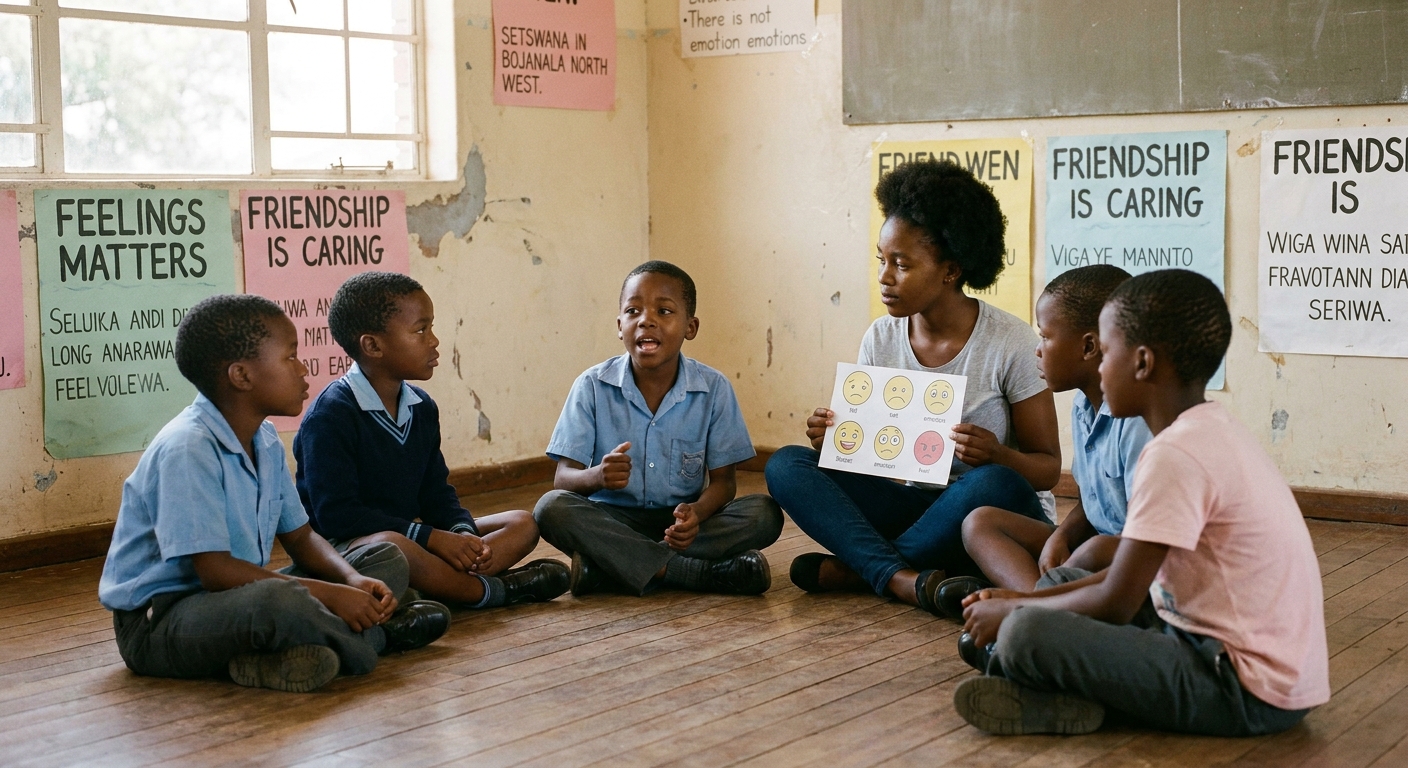
A small circle of children sitting on the floor in a Life Skills sharing session
Goal
A child who knows their feelings, moves their body, and finds something they love to make.
How we teach
Weekly “feelings circle”, two PE sessions on the field, drawing & drumming on alternating Fridays.
Project
End-of-year “Family Concert” with songs in IsiZulu, Setswana and English — everyone on stage.
Assessment
Participation observations, art and drama portfolios — never a written exam.
06

Technology & Design

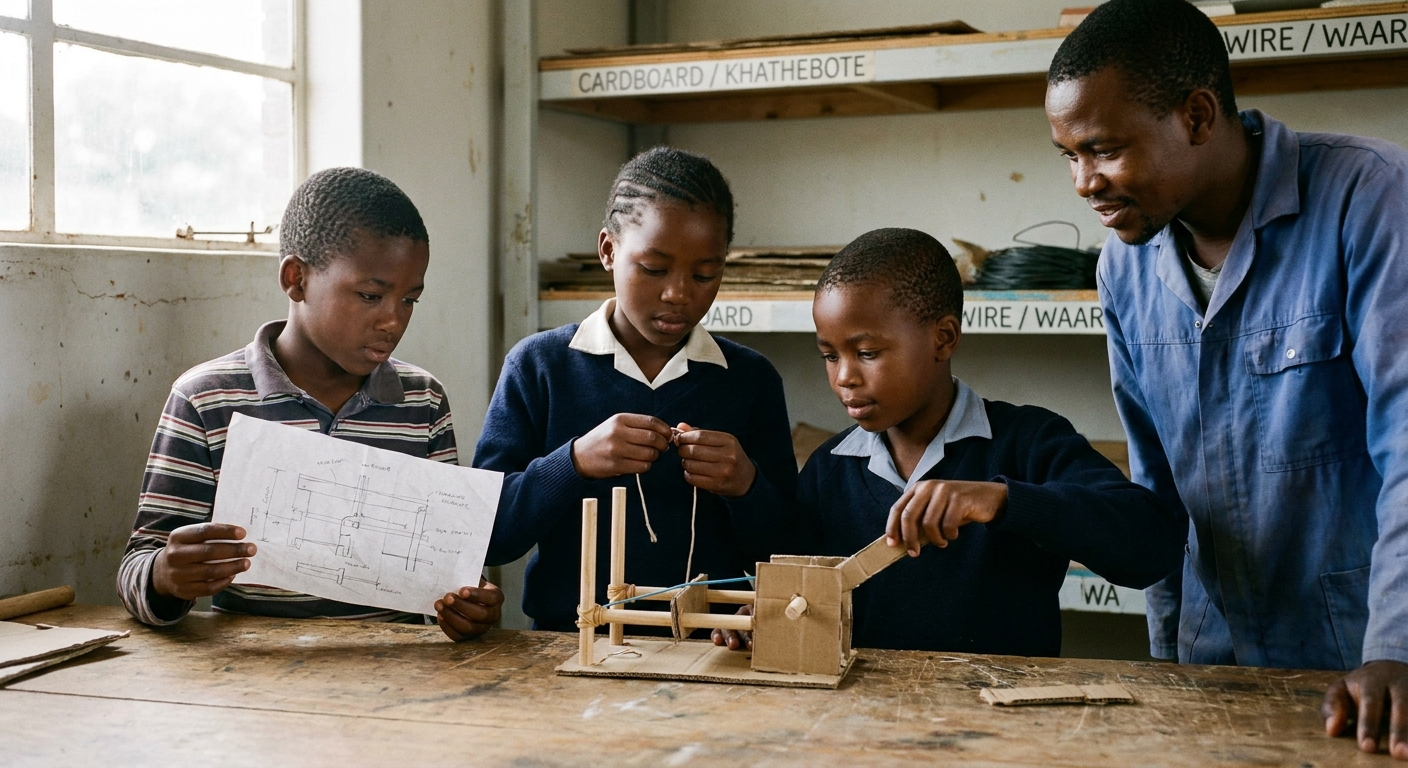
Three children carefully assembling a simple machine from wooden dowels and rubber bands
Goal
To build, break, fix and explain. Useful hands. Patient minds.
How we teach
Design-thinking cycle (investigate — design — make — evaluate) using donated and recycled materials.
Project
“A simple machine that helps my home” — pulleys, levers and ramps from cardboard and string.
Assessment
A 3-stage build log with sketches, photos and a short explanation of the trade-offs they made.

Daily Rhythm

A school day at Magong Primary

  • 07:15–07:45 · Gate opens, breakfast served from the NSNP kitchen.
  • 07:50–08:00 · Morning assembly — song, headcount, one announcement.
  • 08:00–10:30 · Two literacy / numeracy blocks with a short movement break.
  • 10:30–11:00 · Hot lunch (pap and beans, samp, vegetables, fruit).
  • 11:00–13:30 · Subject lessons — Sciences, Social Sciences, Languages.
  • 13:30–14:00 · Life Skills, Arts, or sports rotation.
  • 14:00–14:30 · Reading hour — everyone reads, including the staff.
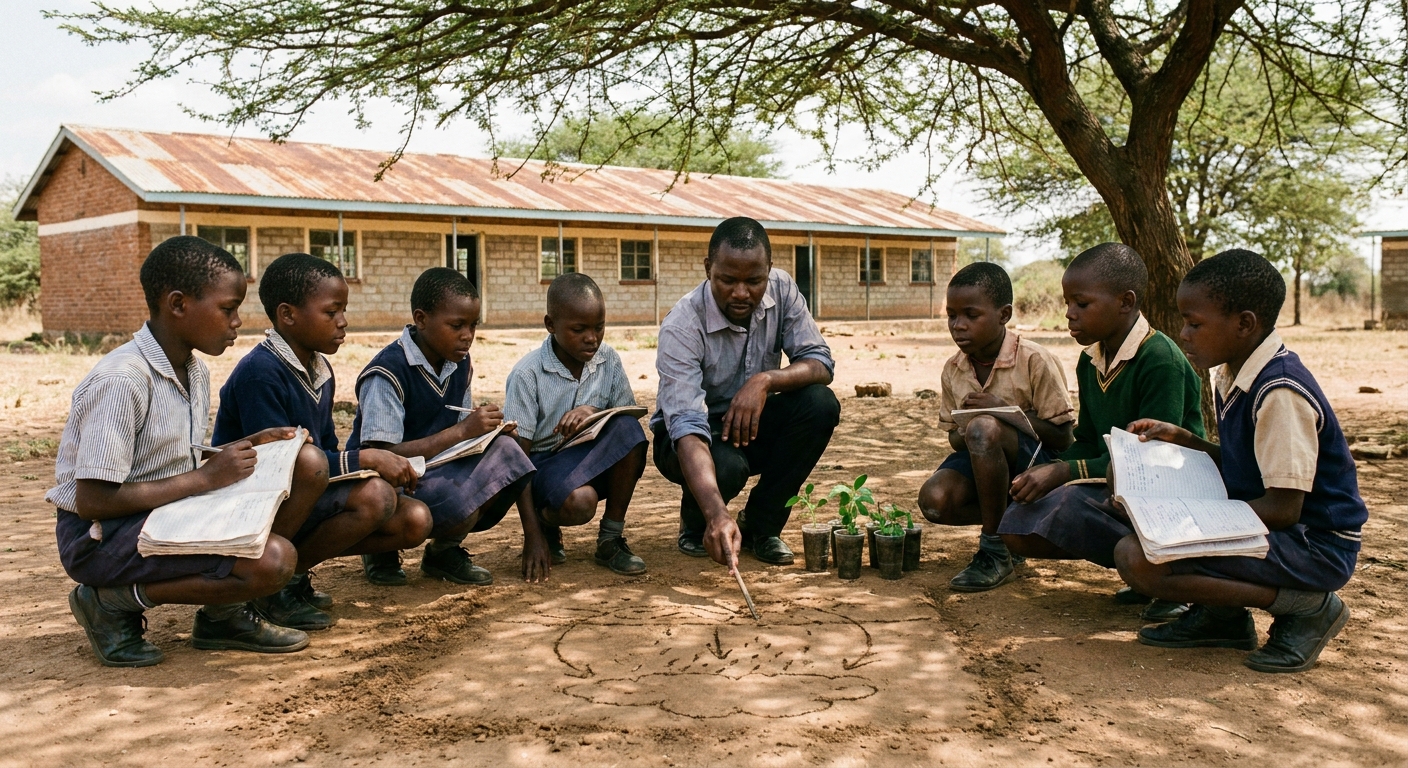
An outdoor learning circle with children kneeling around a teacher drawing on a patch of cleared earth

Progression

From Grade 1 to Grade 6 — one quiet step at a time.

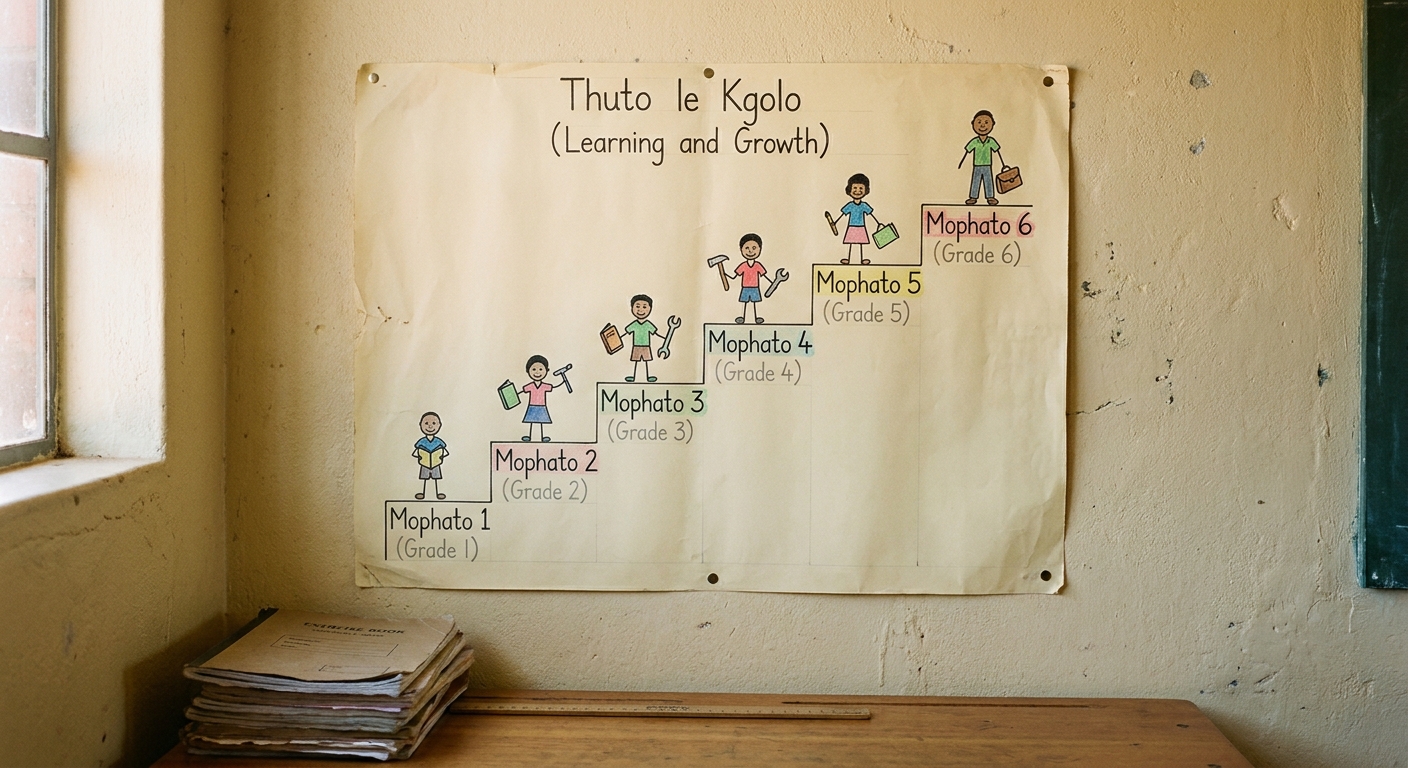
A six-year ladder. Each step lists the one thing we want every child to be able to do by the end of that year. We do not race the ladder; we make sure no rung is empty.

Grade 1
Read 50 sight words. Count to 100. Write your full name.
Grade 2
Read a short story aloud. Add and subtract within 100. Tell time.
Grade 3
Write a paragraph in English. Multiplication tables to 10. Read a thermometer.
Grade 4
Use English as the LOLT. Plan a project. Read a map of our district.
Grade 5
Write an opinion essay. Long division. Defend an idea in a class debate.
Grade 6
Read a chapter book independently. Lead a project from sketch to demo.
A hand-drawn educational progression chart pinned to a classroom wall showing Grade 1 to Grade 6 steps
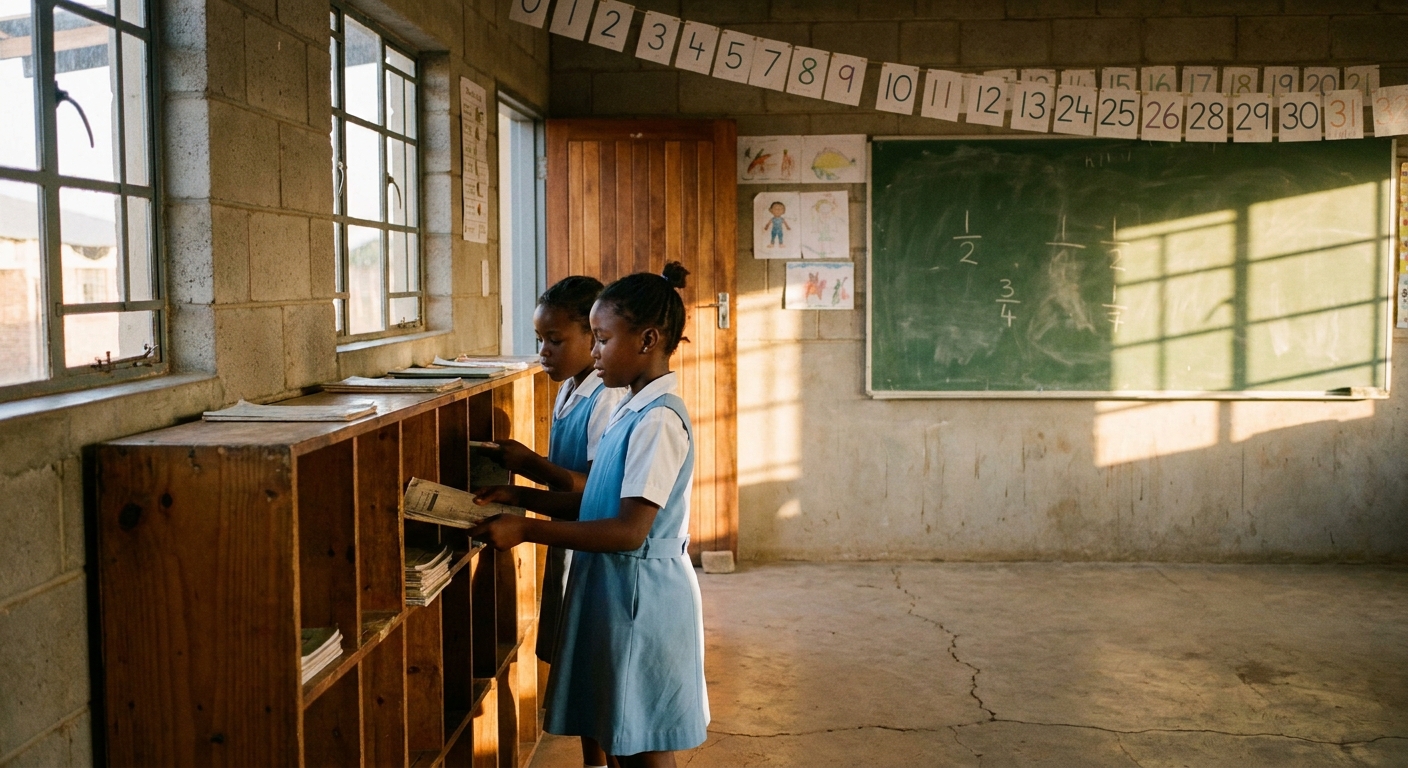
A quiet classroom moment with two girls putting away their exercise books at the end of the day

Assessment Philosophy

A child is not a score.

We follow the national CAPS assessment plan. We also keep a yearly portfolio for each child — six pieces of work they chose to keep. At our end-of-year parent meeting, we walk through that portfolio together. Marks are part of the conversation; the work is the heart of it.

See how parents are involved